What Is the Best Renewable Power Technology in China?
What Is the Best Renewable Power Technology in China? The answer is less obvious than a simple ranking suggests. China has built enormous solar parks, offshore wind farms, hydropower stations, and distributed rooftop systems. Each technology performs differently across deserts, coastlines, mountains, and crowded cities. The strongest option depends on cost, land use, reliability, construction speed, and environmental pressure.
The International Energy Agency reports that renewables were the only energy source whose growth accelerated during the global energy crisis. IEA Executive Director Fatih Birol stated, “Renewables are the only source of energy whose growth has accelerated during the global energy crisis.” His observation provides useful context for China’s rapid transition. Yet growth alone does not identify the best renewable power technology. A solar panel on a factory roof may reduce daytime grid demand. A wind turbine may produce power at night. Hydropower can offer flexibility, but new dams may affect rivers and communities.
The practical answer requires evidence, not enthusiasm. This discussion compares China’s leading technologies through generation potential, grid integration, lifecycle impacts, and real operating conditions. Battery storage and ultra-high-voltage transmission also matter. They can change which technology appears most valuable.
There is no perfect winner.
My initial assumption favors solar because panels are modular and increasingly affordable. That view may be incomplete. Seasonal output, recycling capacity, curtailment, and local grid limits deserve closer attention. The best renewable power technology in China may therefore be a regional combination, rather than one national champion.
Defining Renewable Power Technologies in China
What Is the Best Renewable Power Technology in China?
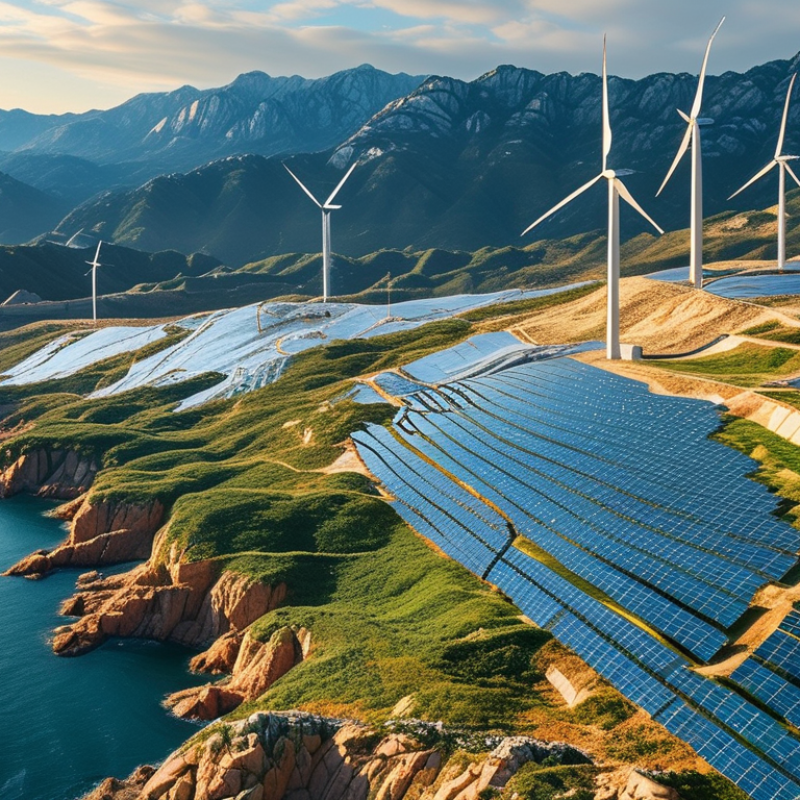
Renewable power technologies convert naturally replenished energy into electricity. In China, this definition includes solar photovoltaic systems, wind turbines, hydropower, biomass generators, and geothermal plants. Each technology uses a different resource, site, and operating method. Solar panels produce electricity from sunlight on rooftops, deserts, and industrial buildings. Wind turbines depend on steady air movement across northern grasslands and coastal areas. Hydropower uses flowing water, often with reservoirs or run-of-river designs.
The phrase “best technology” needs careful definition. A large solar farm may deliver low-cost electricity, but its output changes after sunset. Wind power can generate strongly at night, yet transmission distance and local weather affect its value. Hydropower offers flexibility, although environmental impacts and water availability require strict assessment. Biomass can provide more stable generation, but feedstock transport may reduce its climate advantage. Geothermal power is reliable in suitable regions, but its geographic potential is limited.
A useful evaluation should examine lifecycle emissions, land use, construction quality, grid connection, maintenance, and community effects. Energy storage supports renewable electricity, but storage itself is not a renewable generation technology. This distinction is often missed. My working definition is practical, not perfect. It also needs revision as Chinese provinces improve power markets, forecasting, and grid flexibility. A technology that performs well in a sunny inland province may not suit a densely populated coastal area. Performance must be measured in context.
| Renewable Technology | Installed Capacity in China (End of 2023) |
Typical Capacity Factor in China | Indicative Levelized Cost Range (RMB/kWh) |
Key Strengths | Main Limitations | Best-Fit Applications | Overall Assessment |
|---|---|---|---|---|---|---|---|
| Utility-Scale Solar Photovoltaic | Approximately 609.5 GW | 15%–22% | 0.20–0.35 | Fast deployment, modular construction, falling equipment costs, and strong suitability for large-scale development in northern and western China. | Variable output, land-use requirements, transmission needs in remote regions, and lower production during winter or cloudy periods. | Large solar bases, industrial electricity supply, distributed generation, and hybrid solar-storage projects. | Best for rapid capacity expansion |
| Onshore Wind Power | Approximately 441.3 GW | 22%–32% | 0.20–0.35 | High resource potential in northern, northeastern, and northwestern regions; complements solar because output often occurs at different times of day. | Variable generation, grid congestion in resource-rich areas, visual and ecological concerns, and site-specific permitting requirements. | Large renewable-energy bases, wind-solar-storage complexes, and areas with strong and consistent wind resources. | Best overall balance of scale and cost |
| Offshore Wind Power | Approximately 37.7 GW | 35%–45% | 0.40–0.70 | Strong coastal wind resources, relatively high capacity factors, and proximity to major electricity-load centers in eastern China. | Higher construction and maintenance costs, complex marine engineering, typhoon exposure, and potential impacts on fisheries and marine ecosystems. | Coastal provinces with high power demand and limited land availability. | Best coastal large-scale option |
| Large Hydropower | Approximately 421.5 GW | 35%–50% | 0.20–0.45 | Dispatchable renewable electricity, long operating life, grid-balancing capability, and potential integration with pumped-storage facilities. | Limited remaining sites, long construction periods, high upfront investment, and potential impacts on rivers, ecosystems, and communities. | Flexible generation, peak-load support, and electricity supply from southwestern river systems. | Best for flexibility and system stability |
| Biomass Power | Approximately 43.1 GW | 60%–85% | 0.45–0.75 | Dispatchable generation, waste reduction, and potential recovery of energy from agricultural residues, forestry waste, and organic municipal waste. | Feedstock collection and transport costs, air-emission controls, limited sustainable fuel supply, and relatively high generation costs. | Agricultural regions, waste-treatment facilities, and combined heat-and-power applications. | Best for dispatchable local renewable power |
| Geothermal Power | Small compared with other major renewable technologies | 70%–90% where high-temperature resources are available | 0.35–0.70 | Stable output, small land footprint, and suitability for continuous local generation where geological conditions are favorable. | Restricted geographic availability, exploration risk, drilling costs, and potential reservoir-management challenges. | Resource-specific projects in western and northern regions with suitable geothermal conditions. | Best for niche, steady-output applications |
Related Posts
-
What is Modern Energy Solutions for Global Buyers?
-
What is Clean Energy Technology and How Can It Benefit You?
-
Explore Top Renewable Power Technology in China for Global Buyers?
-
Top 10 Future of Renewable Energy Trends for Global Buyers
-
China Best Sustainable Living Solutions for Global Sourcing?
-
Smart Energy Management Solutions for Global Procurement Needs?
Talk to a solar expert
Fill out the form and our team will be in touch with a free quote based on your local incentives and payment options.