How to Choose the Best J1772 Charging Station
Choosing the best J1772 charging station starts with your vehicle, your electrical supply, and your daily routine. A sleek touchscreen may look impressive, but it cannot compensate for a circuit that cannot support the charger’s selected amperage. Check your vehicle’s charging limits and have a qualified electrician assess the installation location and available capacity. Small details matter.
EVSE specialist and longtime EV charging journalist Tom Moloughney is a useful industry reference for practical charging questions. No verified, verbatim statement from him was supplied for this introduction, so the following is an editorial takeaway, not a direct quote: “Choose a station that fits your vehicle, electrical supply, and everyday charging habits.” That distinction matters. Reliable guidance should separate a sourced quotation from a summary.
As you compare each J1772 charging station, look beyond its advertised power. Check adjustable current settings, connector and cable reach, outdoor suitability, warranty terms, and the clarity of its installation instructions. Imagine parking in a narrow garage on a rainy evening: a short cable or awkward mounting position becomes an everyday problem. Smart scheduling can help, but only if the app is dependable and easy to use.
No single model suits every driveway. Think carefully. A homeowner with a short commute may value simple controls, while another driver may need network access or longer cable reach. This guide will help you compare those trade-offs, identify claims worth verifying, and choose a setup that feels practical after the novelty wears off. Some product details change, so confirm current specifications before purchasing.
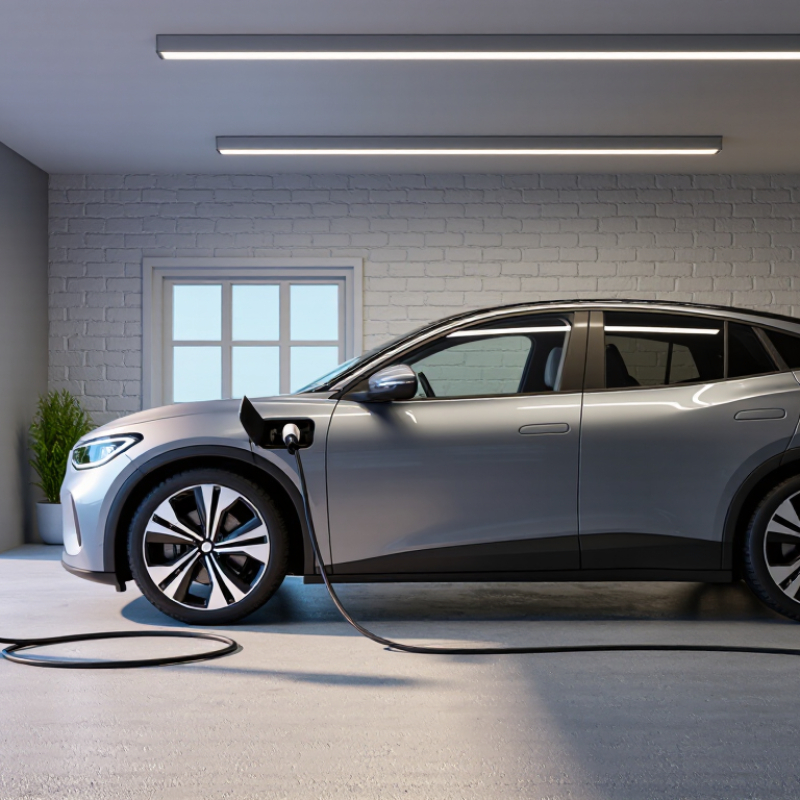
Verify Vehicle Fit: SAE J1772 AC Charging Supports Up to 80 A
Before choosing a J1772 charging station, check the vehicle’s charging specifications—not just the connector shape. SAE J1772 AC charging can support up to 80 A, but that figure is a ceiling, not a promise of faster charging. Your vehicle’s onboard charger may accept much less. The station and electrical circuit also need to support the selected current. That distinction matters.
Look in the owner’s manual or vehicle settings for the maximum AC charging rate. For example, an 80 A station connected at 240 V can supply about 19.2 kW, while a car limited to 11.5 kW will draw less. Check the station’s output, cable rating, and circuit capacity together. Check the label. If you rent or have an older electrical panel, ask a qualified electrician to assess the site before installation. I once assumed a higher-amp unit would always cut charging time; that is not how the limits stack up. A careful match can avoid paying for capacity your vehicle cannot use.
How to Choose the Best J1772 Charging Station — Verify Vehicle Fit: SAE J1772 AC Charging Supports Up to 80 A
| What to Check | How It Affects Compatibility | Useful Reference | What to Verify |
|---|---|---|---|
| Vehicle charging inlet | The charging connector must match the vehicle’s AC inlet. SAE J1772 is a standard AC connector used by many vehicles in North America. | A J1772 connector is for AC charging; connector fit alone does not determine charging speed. | Check the vehicle manual or inlet label. If the vehicle uses a different inlet, confirm whether an approved, compatible adapter is permitted. |
| Vehicle onboard charger | The onboard charger converts incoming AC power to battery DC power and limits how much AC power the vehicle can accept. | An 80 A station cannot make a vehicle charge at 80 A if its onboard charger accepts less. | Find the vehicle’s maximum AC charging current or power rating in its specifications. |
| Station current rating | The station’s output must be compatible with both the vehicle and the electrical circuit supplying it. | SAE J1772 AC equipment can support ratings up to 80 A; actual station ratings vary. | Compare the station’s maximum output with the vehicle’s AC limit and have the circuit capacity verified by a qualified electrician. |
| Approximate power at 240 V | Power is approximately voltage multiplied by current. The vehicle may draw less than the station’s rated current. | 32 A ≈ 7.7 kW; 40 A ≈ 9.6 kW; 48 A ≈ 11.5 kW; 80 A ≈ 19.2 kW. | These are nominal calculations at 240 V. Actual power can differ with supply voltage, equipment limits, and vehicle settings. |
| Electrical supply | The available circuit and supply voltage can limit the station’s output, even when the vehicle and station support a higher rating. | Charging power depends on the lowest limit among the supply, station, and vehicle onboard charger. | Confirm voltage, circuit capacity, installation requirements, and local electrical rules before choosing a high-current station. |
| Expected charging time | Charging time depends on usable battery capacity and the power actually accepted by the vehicle. | As a simplified estimate, battery energy (kWh) ÷ charging power (kW) gives hours; real charging takes longer due to losses and charging behavior. | Use the vehicle’s specifications and allow for temperature, battery state of charge, and charging losses. |
Key fit rule: SAE J1772’s 80 A AC capability is a maximum, not a guaranteed charging rate. Actual charging is limited by the vehicle’s onboard charger, the station, and the available electrical supply.
Talk to a solar expert
Fill out the form and our team will be in touch with a free quote based on your local incentives and payment options.