Skip to content

Top 10 Types of Waste Water RO Systems for Global Buyers

Choosing a Waste Water Ro System is rarely a simple equipment decision. Global buyers must match membrane performance with feedwater quality, flow rate, recovery targets, and operating conditions. A food-processing plant may face oils and organic loading. A metal-finishing facility may require stronger pretreatment and tighter monitoring. Municipal reuse projects often need stable output across changing seasons.

Professor Menachem Elimelech, a leading membrane-treatment researcher, has described membrane separation as “one of the most promising technologies for water purification.” His view reflects the continuing value of reverse osmosis, but performance depends on practical design. Even a high-quality system can lose efficiency when operators ignore fouling, scaling, pressure changes, or cleaning intervals.

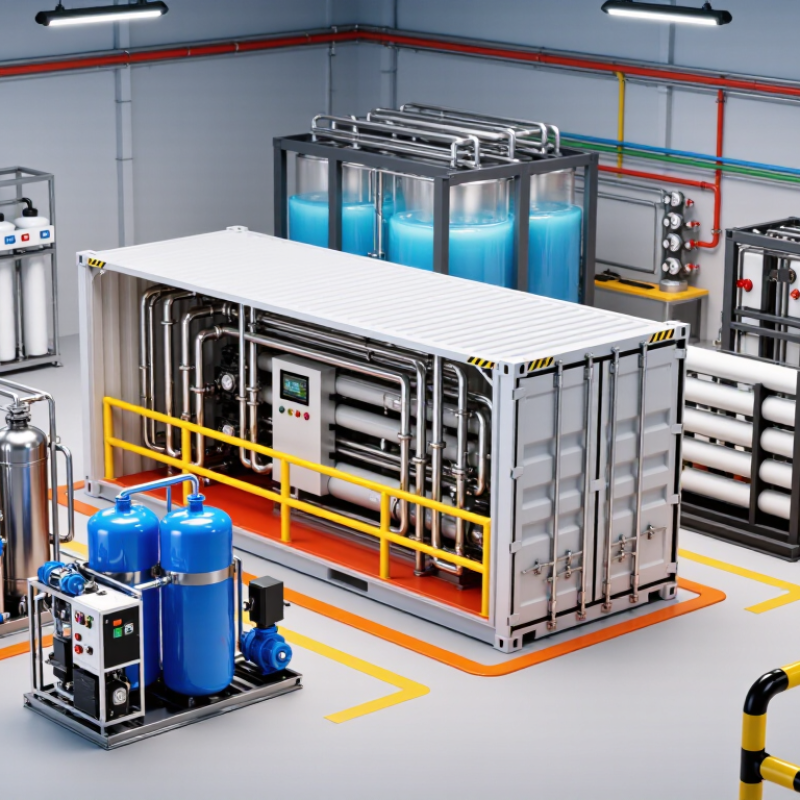
This guide examines ten types of Waste Water Ro System used by international buyers. The list considers containerized units, industrial skid systems, brackish-water designs, high-recovery systems, and specialized solutions for difficult wastewater. Each type has strengths. Each has limitations.

Small details matter. A clogged cartridge filter can raise feed pressure. Poor antiscalant control can shorten membrane life. A compact skid may save floor space but provide less room for future expansion. Buyers should also examine energy consumption, replacement-parts availability, automation quality, and local service support.

No system is perfect. That is worth remembering. Product brochures often present ideal conditions, while real wastewater changes hourly. Reliable selection requires laboratory testing, pilot validation, transparent performance data, and a realistic maintenance plan. The best choice is not always the most powerful system. It is the one that remains stable, serviceable, and financially practical over years of operation.
Top 10 Types of Waste Water RO Systems for Global Buyers

RO Fundamentals: 95–99% Salt Rejection and 50–85% Recovery

Wastewater reverse osmosis (RO) systems are selected by feedwater, flow, and discharge goals. Global buyers often compare industrial, municipal, containerized, brackish-water, and seawater configurations. Their core job remains similar: pressure pushes water through a semipermeable membrane. Dissolved salts stay behind. In well-designed conditions, salt rejection commonly reaches 95–99%. Not every feed stream behaves so neatly. High organics, oil, hardness, or poor pretreatment can reduce performance quickly. Membranes need protection.

Recovery describes the feedwater converted into permeate. Many wastewater RO systems operate near 50–85% recovery, depending on concentration limits and membrane design. At 70% recovery, 1,000 liters of feed may produce about 700 liters of permeate. The remaining 300 liters becomes concentrate. It still requires controlled handling. Higher recovery can reduce freshwater demand, but it may increase scaling risk, cleaning frequency, and energy use. Numbers matter.

Experienced operators check conductivity before and after each stage, then review pressure, temperature, and flow trends. A salt rejection figure without test conditions can mislead procurement teams. Ask for pilot data using representative wastewater, not only clean laboratory water. Field operators often see systems meet a target briefly, then decline after fouling appears. That result may expose weak pretreatment or unrealistic recovery expectations. Buyers should allow for seasonal variation, maintenance, and imperfect data.

Top 10 Types of Wastewater RO Systems for Global Buyers

Typical reverse osmosis performance: 95–99% salt rejection and 50–85% recovery

The chart compares representative operating values across common wastewater RO applications. Actual performance depends on feedwater chemistry, pretreatment, membrane selection, pressure, temperature, fouling control, and concentrate-management requirements.

Step 1—Classify Feedwater: Brackish, Seawater, Municipal, and Industrial

Top 10 Types of Waste Water RO Systems for Global Buyers

Step 1—Classify Feedwater: Brackish, Seawater, Municipal, and Industrial

Feedwater classification determines membrane selection, pretreatment, pressure, and expected recovery. Start with a laboratory report, not a visual inspection. A clear sample can still contain harmful salts, oil, or dissolved metals.

Brackish water usually has moderate salinity and needs less pressure than seawater. However, its composition varies widely between wells and regions. Test conductivity, hardness, silica, iron, manganese, pH, and silt density index. These results guide antiscalant dosing and cartridge filtration. Small errors here can shorten membrane life.

Seawater requires high-pressure equipment and strong pretreatment. Seasonal algae, suspended solids, and temperature changes can affect performance. Municipal wastewater often contains disinfectant residuals, detergents, and biological matter. Activated carbon or chemical protection may be necessary before the RO stage. Industrial wastewater is the most difficult category. Its feed may include solvents, dyes, heavy metals, or changing organic loads. One standard design rarely fits every factory.

In practical projects, operators should collect samples during different production periods. A single sample may hide peak contamination. I once reviewed a design based on average conductivity, but the real problem was intermittent oil carryover. The calculation looked reasonable. The operating conditions were not. Feedwater data should include flow, temperature, daily variation, and discharge requirements. Recovery targets must respect concentrate handling capacity, not just membrane specifications.

Step 2—Compare the Top 10 Wastewater RO System Types by Application

Choosing a wastewater RO system starts with the application, not the equipment name. Municipal reuse systems handle variable flows and require strong pretreatment. Industrial process-water systems target stable conductivity and consistent production. Boiler-feed RO systems need very low hardness and careful degassing. Cooling-tower blowdown systems focus on salt reduction and water recovery.

Landfill-leachate RO systems manage complex organics, ammonia, and changing contaminant loads. Mining wastewater systems often face high mineral content, suspended solids, and difficult concentrate disposal. Food and beverage systems must support hygienic operation and frequent cleaning. Pharmaceutical wastewater systems demand validated materials, monitoring, and strict process control. Textile wastewater systems commonly require excellent color removal before RO. Decentralized or containerized RO systems suit remote sites, temporary projects, and limited footprints.

The comparison is not perfect. Applications overlap, and wastewater quality can change quickly. A municipal unit may need industrial-grade pretreatment during storm events. A food plant may require more cleaning cycles than its flow rate suggests. Site trials, membrane projections, and laboratory analysis should guide selection. Review feed conductivity, temperature, SDI, recovery, cleaning access, and concentrate handling. Small details matter. In practice, poor pretreatment causes more failures than membrane selection alone. I have found that operators often underestimate seasonal variation. A system sized only for average flow may struggle during production peaks. Reliable buyers should request operating data, maintenance records, and clear performance limits before comparing purchase prices.

Top 10 Types of Wastewater RO Systems for Global Buyers - Step 2—Compare the Top 10 Wastewater RO System Types by Application

No. RO System Type by Application Typical Wastewater Source Typical Feed TDS
(mg/L)
Typical Recovery Common Pretreatment Preferred Membrane Configuration Typical Energy
(kWh/m³)
Main Design Challenge Common Reuse Target
1 Municipal Tertiary-Reuse RO Secondary-treated municipal effluent 500–2,000 75–90% Biological treatment, clarification, media or membrane filtration, cartridge filtration, disinfection Low-pressure brackish-water RO with fouling-resistant elements 0.5–1.5 Biofouling, residual organics, and consistent pathogen control Industrial reuse, irrigation, toilet flushing, and cooling make-up water
2 Industrial Process-Water RO General manufacturing wastewater after equalization and treatment 1,000–10,000 70–85% Equalization, pH adjustment, coagulation, clarification, multimedia and cartridge filtration Single-pass or two-pass brackish-water RO 0.8–2.0 Variable chemistry, scaling potential, and changing production loads Process rinsing, washing, formulation, and general utility water
3 Boiler-Feedwater RO Treated industrial wastewater or cooling-water discharge 500–5,000 70–85% Softening or antiscalant dosing, iron and manganese removal, multimedia and cartridge filtration Two-pass RO, often followed by electrodeionization or mixed-bed polishing 0.8–2.0 Very low silica, hardness, and conductivity requirements Low- and medium-pressure boiler make-up water
4 Cooling-Tower Blowdown RO Concentrated cooling-tower blowdown 1,000–5,000 75–90% Side-stream filtration, pH control, softening or antiscalant dosing, cartridge filtration Compact brackish-water RO with automatic flushing 0.6–1.5 High cycles of concentration, silica scaling, and intermittent operation Cooling-tower make-up water
5 Textile-Dyeing Wastewater RO Dyeing, printing, washing, and finishing effluent 1,000–5,000 65–85% Biological treatment, coagulation, color reduction, ultrafiltration, cartridge filtration Fouling-resistant brackish-water RO, sometimes in two stages 0.9–2.2 High color, surfactants, dissolved organics, and membrane fouling Dye-bath reuse, washing water, and low-salt process applications
6 Food and Beverage Wastewater RO Food processing, beverage production, and cleaning wastewater 500–5,000 70–90% Screening, dissolved-air flotation, biological treatment, ultrafiltration and cartridge filtration Sanitary-design brackish-water RO with frequent cleaning capability 0.7–1.8 High biodegradable load, fats, oils, proteins, and hygiene requirements Cleaning, boiler make-up, cooling, and non-product-contact utilities
7 Pharmaceutical Wastewater RO Pharmaceutical manufacturing and equipment-cleaning effluent 500–3,000 70–85% Equalization, advanced biological treatment, activated carbon, ultrafiltration and fine filtration Two-pass RO with hygienic piping and validated cleaning procedures 0.8–2.0 Trace organics, variable chemical composition, and strict quality control Utility water, purified-water pre-treatment, and controlled process reuse
8 Landfill-Leachate RO Collected leachate from municipal or industrial landfills 2,000–15,000 50–80% Screening, equalization, pH adjustment, biological treatment, cartridge or ultrafiltration High-pressure RO with robust concentrate handling 1.5–4.0 High organic load, ammonia, hardness, fouling, and difficult concentrate disposal Discharge polishing or controlled site reuse where regulations permit
9 Mining and Mineral-Processing RO Mine drainage, tailings water, and mineral-processing effluent 2,000–50,000 60–85% Neutralization, metals precipitation, clarification, media filtration and cartridge filtration Brackish-water or high-pressure RO selected according to salinity 1.2–4.0 Heavy metals, silica, suspended solids, scaling, and seasonal flow changes Dust suppression, process reuse, ore washing, and environmental discharge polishing
10 High-Salinity Industrial Wastewater RO Chemical, petrochemical, power, and other saline industrial streams 10,000–70,000 50–75% Oil removal, chemical precipitation, softening, ultrafiltration and cartridge filtration High-pressure brackish-water or seawater-type RO, often in multiple stages 2.0–5.0 High osmotic pressure, severe scaling risk, corrosion, and concentrate disposal Process reuse, utility water, zero-liquid-discharge pre-treatment, or volume reduction
Data note: The values shown are typical preliminary design ranges for comparison only. Actual RO performance depends on wastewater chemistry, temperature, pretreatment quality, membrane selection, operating pressure, local discharge regulations, and concentrate-management requirements.

Step 3—Evaluate Design Metrics: 10–40 LMH Flux and 2.5–6 kWh/m³

Top 10 Types of Waste Water RO Systems for Global Buyers

When comparing wastewater RO systems, flux and energy use reveal practical design quality. Flux measures permeate production per membrane area, usually in LMH. A 10–40 LMH range can suit different wastewater conditions and treatment targets. Lower flux often reduces fouling, while higher flux may reduce equipment size. The correct choice depends on feed quality, temperature, recovery, and pretreatment performance.

Energy demand commonly falls between 2.5 and 6 kWh/m³. This figure changes with operating pressure, salinity, recovery, and pump efficiency. In field projects, oily wastewater and unstable pretreatment can push energy use upward. Engineers should review normalized flux, pressure trends, and conductivity readings over several operating days. A single commissioning result can look excellent but remain misleading. Pilot testing is safer than relying only on supplier calculations.

Tips: Request test data using wastewater similar to yours. Confirm whether energy figures include high-pressure pumps, cleaning systems, and pretreatment. Check performance at the lowest expected water temperature. Ask for fouling-control procedures and realistic recovery rates. Leave operating margin in the design. I have seen systems meet the target flux briefly, then decline after suspended solids increased. That overlooked detail can distort the entire cost model.

Step 4—Select Global Systems by Capacity, Standards, Pretreatment, and TCO

For global buyers, Step 4 turns the “Top 10 Types of Waste Water RO Systems” into a practical selection process. UN-Water’s SDG 6 Progress Update 2024 reports that 42% of household wastewater was not safely treated in 2022. WHO and UNICEF’s JMP 2023 report also found that 2.2 billion people lacked safely managed drinking water in 2022. These figures make capacity planning more than a spreadsheet exercise.

Match design flow with average, peak, and seasonal demand. Record feed TDS, temperature, oil, hardness, silica, and biological loading. A system rated for 100 m³/day may fail during a 160 m³/day production peak. Pretreatment should remove suspended solids before cartridge filtration and membranes. Standards must cover local discharge permits, reuse quality, worker safety, and sampling frequency. Do not copy a specification from another country. Its limits may not transfer.

Tips: Keep sampling records. Do not trust averages. Ask for recovery, energy, chemical, membrane, labor, and concentrate-disposal costs. Those figures form total cost of ownership, not the purchase price alone. The World Bank’s Wastewater: From Waste to Resource report links better wastewater management with resource recovery and stronger operational planning. Still, a perfect TCO model is unlikely. Electricity prices change. Membrane life varies. My field experience suggests budgeting for cleaning, downtime, and operator training early, although buyers often underestimate them. A cheaper system can become expensive when pretreatment is weak.