China Best Off Grid Energy Solutions for Global Buyers
For global buyers, China has become a major source of off grid energy solutions for homes, farms, construction sites, and remote businesses. Its manufacturing base supports solar panels, lithium battery storage, hybrid inverters, portable power stations, and complete microgrid systems. These products can supply electricity where grid access is weak, expensive, or unavailable. A small cabin may need only a 5 kWh battery and rooftop panels. A rural clinic may require higher capacity, backup generation, and stable power management.
Reliable sourcing requires more than comparing product prices. Buyers should examine battery chemistry, cycle life, inverter efficiency, protection features, operating temperature, and communication options. Factory audits, sample testing, and clear technical documents can reveal differences hidden in attractive quotations. Certification requirements also vary between markets. Suppliers should provide relevant test reports and support compliance with the buyer’s local regulations. Warranty terms, replacement procedures, spare parts, packaging, and delivery schedules deserve equal attention.
No system fits every location. Weather patterns, load changes, installation skills, and maintenance access can affect real performance. A cheaper battery may create higher costs later. That risk is easy to underestimate. Experienced suppliers can recommend suitable configurations, but buyers should verify every important claim independently. China’s strongest advantage is not simply low cost. It is the ability to customize equipment, integrate multiple components, and support projects at different scales. Still, quality control must remain continuous, from factory inspection to commissioning. Careful evaluation helps global buyers choose practical, safe, and dependable energy systems for long-term use.
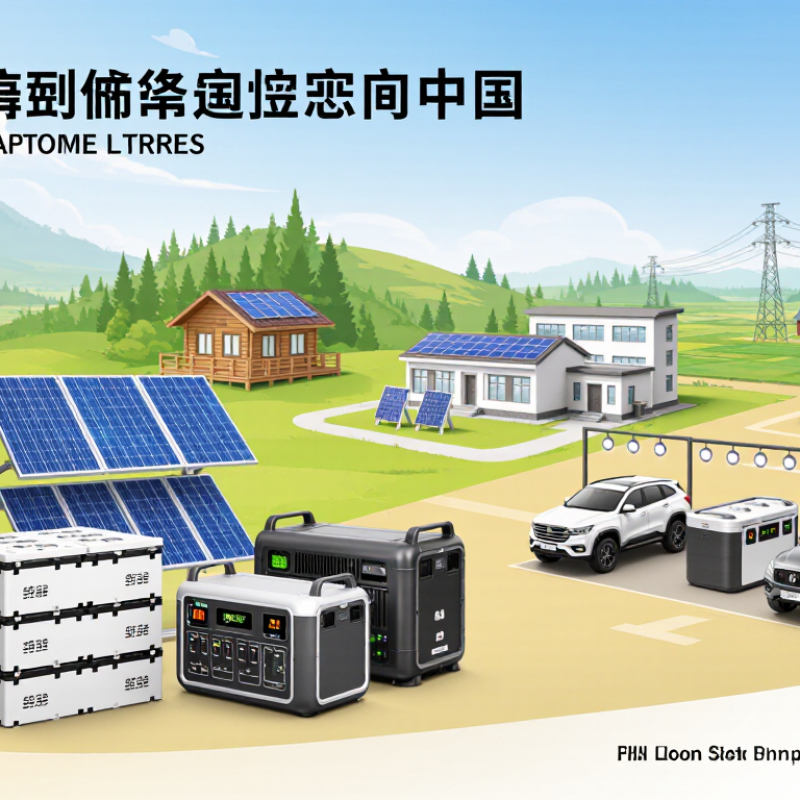
What Are Off-Grid Energy Solutions?
Off-grid energy solutions generate and manage electricity without relying on a public utility network. They commonly combine solar panels, batteries, inverters, charge controllers, and backup generators. The system supplies power directly to homes, farms, construction sites, clinics, or remote businesses. It can support lighting, refrigeration, water pumps, communications equipment, and essential machinery.
A practical design begins with a load assessment. Measure daily consumption, starting current, seasonal demand, and hours of operation. A cold storage unit may run continuously, while a water pump may operate briefly but require high starting power. Solar production depends on local sunlight, panel direction, temperature, and weather. Battery capacity must cover nighttime use and several low-sun days. Small details matter.
Sizing is not always perfect. Weather forecasts can fail, batteries gradually lose capacity, and users often underestimate future electricity needs. Regular inspection helps identify loose connections, dust-covered panels, unusual battery heating, and inverter alarms. Qualified technicians should follow local electrical codes and use suitable protection against overloads, short circuits, and lightning. A generator may improve reliability, but it adds fuel costs, noise, emissions, and maintenance. The best solution balances safety, availability, operating cost, and realistic energy demand rather than chasing maximum capacity.
China Best Off Grid Energy Solutions for Global Buyers - What Are Off-Grid Energy Solutions?
| Solution Type | Primary Energy Source | Typical System Capacity | Typical Applications | Main Components | Typical Storage or Backup | Key Benefits | Main Limitations |
|---|---|---|---|---|---|---|---|
| Solar Photovoltaic System | Sunlight | 1–100 kW for homes, farms, telecom sites, and small commercial facilities | Residential power, lighting, water pumping, refrigeration, communications, and small businesses | Solar modules, mounting structure, charge controller or hybrid inverter, batteries, protection devices, and monitoring equipment | Lithium-ion or lead-acid batteries; generator backup may be added | Low operating emissions, modular design, quiet operation, and simple expansion | Output varies with sunlight, weather, seasonal conditions, and available roof or land area |
| Solar–Battery Energy System | Sunlight with battery storage | 2–100 kW of inverter capacity with approximately 5–500 kWh of battery storage | Critical loads, remote homes, clinics, schools, emergency shelters, and small commercial sites | Solar modules, battery bank, battery management system, hybrid inverter, energy management system, and safety equipment | Approximately 1–3 days of autonomy is commonly designed, depending on load and local solar conditions | Provides electricity after sunset and can supply selected loads during grid outages | Higher initial cost; battery temperature, depth of discharge, and maintenance affect service life |
| Small Wind Energy System | Wind | 1–100 kW, depending on wind resource and tower height | Coastal areas, islands, agricultural sites, telecommunications, and remote facilities | Wind turbine, tower, controller, inverter, batteries, braking system, and protection equipment | Battery storage is commonly combined with solar or a backup generator | Can generate electricity at night and during periods of limited sunlight | Requires a suitable wind resource, structural installation, periodic maintenance, and appropriate siting |
| Solar–Wind Hybrid System | Sunlight and wind | 2–100 kW combined renewable generation capacity | Islands, coastal communities, remote farms, monitoring stations, and telecommunications sites | Solar modules, wind turbine, hybrid controller, inverter, batteries, tower, and energy monitoring system | Battery storage sized for the required load and expected renewable variability | Diversifies energy production and can improve availability compared with a single renewable source | More design, installation, and maintenance requirements than a single-source system |
| Micro-Hydropower System | Flowing water and elevation difference | 0.5–100 kW for small streams, irrigation channels, and suitable water infrastructure | Mountain communities, rural workshops, farms, and facilities near reliable streams | Water intake, penstock, turbine, generator, controller, inverter, civil works, and protective equipment | Small batteries or load-management equipment may be used; storage needs can be lower where water flow is continuous | Can provide stable power day and night with high annual utilization where water flow is reliable | Site-specific civil construction is required, and output may decline during dry seasons |
| Biomass or Biogas Generator System | Agricultural residues, wood waste, landfill gas, or anaerobic digestion gas | 5–500 kW, depending on fuel availability and project scale | Farms, food-processing facilities, rural industries, and communities with consistent organic waste | Fuel preparation or digester system, engine-generator, gas cleaning equipment, controls, fuel storage, and emissions equipment | Fuel storage and batteries may be used to manage starting and peak loads | Dispatchable generation and potential use of waste materials; heat can sometimes be recovered | Needs a dependable fuel supply, regular maintenance, trained operators, and appropriate emissions management |
| Fuel Generator Backup System | Diesel, gasoline, natural gas, or other approved fuels | 2–500 kW for backup and remote power applications | Emergency backup, construction sites, remote industrial loads, and locations with limited renewable resources | Engine-generator, fuel tank, automatic transfer or control system, exhaust system, distribution equipment, and safety devices | Fuel reserves are typically sized according to required runtime; batteries may support short-duration loads | High power availability and rapid dispatch when fuel is accessible | Fuel costs, noise, emissions, mechanical maintenance, and logistics can increase operating expenses |
| Renewable Hybrid Microgrid | Two or more sources, commonly solar, wind, hydro, biomass, and a fuel generator | 10 kW–1 MW for villages, resorts, industrial sites, and community facilities | Community electrification, remote industrial operations, islands, hospitals, schools, and commercial campuses | Multiple generators, battery energy storage, power converters, microgrid controller, distribution network, protection, and monitoring | Battery storage plus dispatchable generation or controllable loads | Improves reliability, reduces dependence on one resource, and supports load prioritization | Requires detailed load analysis, coordinated controls, skilled commissioning, and higher system complexity |
Notes: Capacity and storage figures are typical planning ranges for small and medium off-grid projects, not fixed specifications. Final sizing depends on peak demand, daily energy consumption, local climate, renewable-resource assessment, required autonomy, operating temperature, safety standards, and applicable electrical regulations.
Related Posts
-
China Best Sustainable Living Solutions for Global Sourcing?
-
2026 Top Sustainable Living Solutions for Global Buyers?
-
What Is the Best Renewable Power Technology in China?
-
What Are the Key Solar Power Benefits for Global Buyers?
-
What Are the Top 10 Home Energy Solutions?
-
Explore Top Renewable Power Technology in China for Global Buyers?
Talk to a solar expert
Fill out the form and our team will be in touch with a free quote based on your local incentives and payment options.