Choosing the best home power solutions from China requires more than comparing battery capacity or advertising prices. Chinese manufacturers now offer portable power stations, solar generators, hybrid inverters, lithium batteries, and complete residential energy storage systems. These products can support refrigerators, routers, lighting, medical equipment, and essential appliances during outages. However, the right choice depends on local electricity standards, household demand, climate, installation space, and service availability.
A practical evaluation should begin with daily energy use and backup priorities. For example, a 3 kWh battery may run a refrigerator, Wi-Fi router, and several lights overnight, but it may not support electric heating for long. Safety matters more than impressive specifications. Look for verified battery management systems, thermal protection, transparent warranty terms, and certifications accepted in the destination market. Inverters should match local voltage, frequency, and grid-connection requirements. Professional installation is also important for permanent systems.
Real-world performance can differ.
Some manufacturers communicate clearly. Others do not. Product data may reflect ideal laboratory conditions, not winter temperatures or aging batteries. Buyers should examine independent testing, factory experience, after-sales support, spare-parts access, and software reliability. Price remains attractive in China, but the cheapest option may create costly problems later. This guide compares major product types and supplier considerations, while recognizing an uncomfortable truth: no single system is best for every home. Reliable power comes from matching verified equipment with realistic household needs.
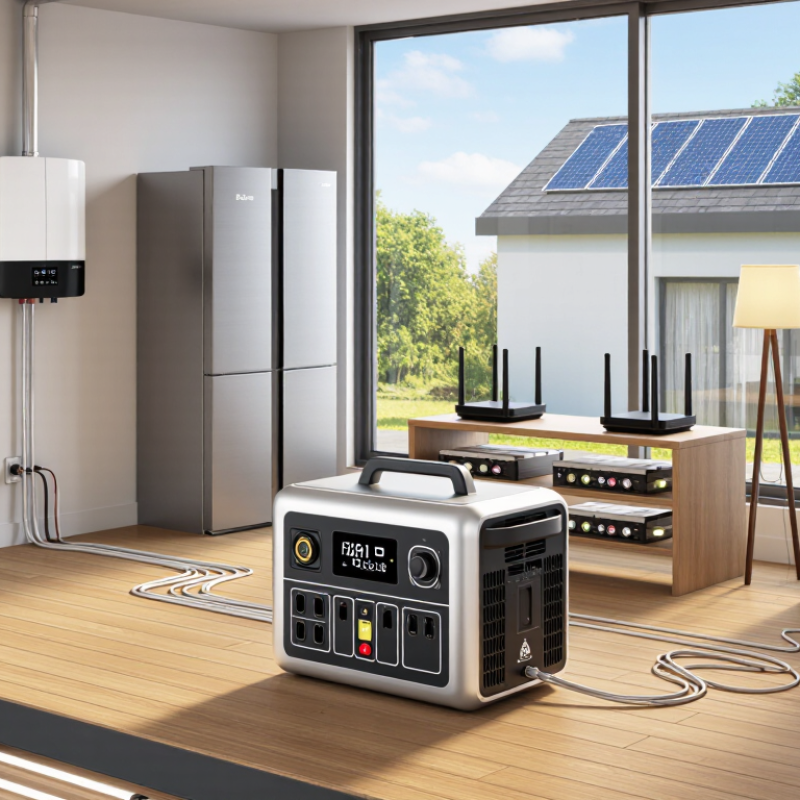
China manufactures several practical types of home power solutions for different living conditions. Portable power stations combine lithium batteries, inverters, and multiple outlets in one case. They can run lights, routers, fans, and small medical equipment during short outages. Solar generators add foldable panels, making them useful for balconies, apartments, and remote houses. Charging speed varies widely. It depends on panel size, sunlight, battery temperature, and cable quality.
Home battery storage systems offer a more permanent option. These units store electricity from rooftop solar or the grid, then release it during peak hours or blackouts. Typical systems include battery modules, a hybrid inverter, a monitoring gateway, and safety controls. Some Chinese factories also produce wall-mounted batteries, stackable units, and compact backup systems for small homes. Factory testing may cover insulation, thermal performance, cycle life, and inverter communication. Still, test reports need careful verification. Paperwork alone cannot prove long-term field performance.
There are also uninterruptible power supplies for computers, networking equipment, and security devices. They switch quickly when voltage drops, protecting sensitive electronics from sudden interruptions. For larger homes, integrated energy storage cabinets can coordinate solar input, battery charging, and household loads. Installation experience matters here. An incorrectly sized system may waste capacity or overload circuits. I have found that clear load measurements are more useful than impressive capacity claims. Even then, real usage can surprise you. A refrigerator’s startup surge, winter heating, and cloudy weeks can change the calculation. Reliable suppliers should explain these limits, provide service documents, and support compliance with local electrical standards.
Chinese home energy systems usually connect rooftop solar panels, a hybrid inverter, batteries, household circuits, and the public grid. Solar panels produce direct current, while the inverter converts it into usable alternating current. A control system then decides where the electricity should go.
During the day, solar power may run appliances such as refrigerators, pumps, and induction cookers. Extra electricity can charge the battery. After sunset, the battery supplies selected circuits, often including lights, internet equipment, and medical devices. If stored energy becomes low, the system can draw power from the grid. During an outage, an automatic switch may isolate the home and maintain backup power. This detail matters. Without safe isolation, electricity could flow into external lines and create serious risks for repair workers.
In practice, performance depends on roof direction, seasonal sunlight, battery temperature, and daily energy habits. A household using electric heating needs a larger system than one powering only lights and electronics. Good installers measure peak loads instead of guessing from monthly bills. They should also check ventilation, cable protection, grounding, and local electrical requirements. Batteries need monitoring, too.
The system is not perfect. Cloudy days reduce solar output. Batteries also lose capacity over time. My first view was that bigger storage always meant better protection, but that is not accurate. Oversized equipment can increase cost without improving everyday value. Reliable planning needs measured data, professional inspection, and clear maintenance records.
This illustrative 24-hour profile shows how rooftop solar, a home battery, and the grid can work together. Solar production mainly occurs during daylight, while the battery shifts surplus energy to evening and night-time demand.
What Are the Best Home Power Solutions from China?
Key Features to Compare in Chinese Power Solutions
Choosing a Chinese home power solution requires more than checking its advertised capacity. Compare usable watt-hours, continuous output, and peak surge performance. A refrigerator may need extra power during startup. A system that looks powerful on paper can still struggle overnight.
Battery chemistry matters. Lithium iron phosphate cells usually offer strong thermal stability and long cycle life. Ask for cycle-testing conditions, not only impressive numbers. Check whether the battery management system monitors temperature, voltage, and cell balance. It should also provide clear fault alerts. Safety documentation should include relevant electrical testing and transport records, such as IEC-based reports and UN 38.3 evidence.
The inverter needs to match local voltage, frequency, and household loads. Examine transfer time if backup power must protect computers or medical equipment. Solar input range, maximum charging current, and weather resistance also deserve attention. An outdoor unit may face dust, rain, and summer heat. Look for a suitable IP rating and tested operating temperatures. Warranty length matters, but repair access matters more. Confirm replacement parts, response times, and service procedures in writing.
I once focused too heavily on battery capacity. That was a mistake. Daily efficiency and standby consumption can affect real savings. Mobile applications are useful, but stable manual controls are safer when internet access fails. Ask for independent test results, serial traceability, and firmware update policies. Some product specifications remain unclear. That uncertainty should influence the purchase, not be ignored.
| Comparison Dimension | Portable Power Station | Solar Generator System | Hybrid Inverter and Battery System | Home Backup Battery System |
|---|---|---|---|---|
| Typical use | Short outages, travel, camping, emergency appliances | Renewable charging with portable or semi-portable backup | Daily energy management and whole-home or partial-home backup | Extended backup for essential household circuits |
| Common battery chemistry | Lithium iron phosphate (LFP) is increasingly common | Usually LFP; some systems may use other lithium-ion chemistries | LFP or other lithium-ion batteries, depending on system design | LFP is widely selected for stationary residential storage |
| Typical energy capacity | Approximately 0.2–5 kWh per unit; expandable models may provide more | Approximately 0.5–10 kWh, depending on battery modules | Approximately 5–30+ kWh for residential configurations | Approximately 5–30+ kWh, often expandable with additional modules |
| Output power | Approximately 300–3,000 W continuous output | Approximately 500–5,000 W, depending on inverter size | Approximately 3–15 kW for single- or multi-unit installations | Approximately 3–15 kW, depending on inverter and wiring configuration |
| Solar input | Built-in MPPT input is common; input limits vary by model | Designed around solar charging; MPPT efficiency and input voltage range are key | Integrated MPPT or dedicated solar inverter; suitable for fixed rooftop arrays | May require a separate solar inverter or energy-management controller |
| Charging methods | AC outlet, solar, and often vehicle charging | Solar, AC grid power, and sometimes generator or vehicle input | Grid, solar, and optional generator charging | Grid and solar charging; generator support depends on the inverter |
| Transfer time | Some models offer UPS-style switching; verify the specified transfer time | Can support backup switching; performance depends on inverter architecture | Often designed for automatic backup; exact response depends on the backup gateway | Typically uses an automatic transfer device or backup gateway |
| Installation | Plug-and-play; normally no electrical work is required | Portable or semi-permanent installation; solar wiring must be correctly sized | Professional installation is normally required for fixed household wiring | Professional installation and local electrical approval may be required |
| Portability | High; smaller units may include handles or wheels | Medium; portability decreases as battery capacity and solar equipment increase | Low; intended for fixed residential installation | Low; typically wall-mounted or floor-standing |
| Noise level | Low during battery operation; fans may run under heavy load | Low to moderate, depending on inverter cooling and load | Generally low; cooling fans may produce audible noise | Generally low, but installation location and cooling design matter |
| Safety features to check | Battery management system, over-current, over-temperature, short-circuit, and over-charge protection | All portable-station protections plus solar input and isolation protection | Battery management, anti-islanding, surge protection, grounding, and thermal monitoring | Battery management, thermal protection, isolation, short-circuit, and system-level fault detection |
| Smart energy management | Display and mobile monitoring are common | Monitoring may include solar yield, battery level, and load consumption | Supports load prioritization, time-of-use scheduling, and solar self-consumption | May support household load monitoring, peak shaving, and backup reserve settings |
| Best for | Renters, travelers, and users needing simple emergency power | Users seeking renewable charging with flexible backup capability | Homeowners wanting solar integration and automatic daily energy control | Households prioritizing longer backup duration and essential-load protection |
| Main limitation | Limited capacity for high-power appliances or long outages | Solar output depends on weather, roof or ground space, and system sizing | Higher installation complexity and upfront cost | Requires adequate space, electrical integration, and careful backup-load planning |
Note: Specifications are typical market ranges for generic residential solutions and vary by model, local grid requirements, battery configuration, and installation conditions. Always verify product certifications, warranty terms, protection ratings, and compliance with local electrical codes.
What Are the Best Home Power Solutions from China?
China’s home power market is expanding with global battery demand. The IEA reported that battery demand reached about 750 GWh in 2023. That growth makes safety testing more important, not optional. A reliable household system should show evidence of IEC 62619 testing for industrial lithium batteries, IEC 62109 testing for power converters, and UN 38.3 transport compliance. These standards examine electrical safety, transport risks, and battery abuse conditions. Certification alone is not a magic shield.
Quality also depends on manufacturing discipline. During supplier evaluations, buyers should inspect cell traceability, thermal sensors, insulation spacing, and emergency shutdown design. A good system should record temperature changes inside the battery cabinet. It should also prevent charging during unsafe conditions. The International Energy Agency’s Batteries and Secure Energy Transitions report highlights the need for stronger battery supply-chain standards as deployment accelerates. Reports from independent laboratories matter more than attractive product claims.
Regional approval is another practical issue. A product designed for China may need different grid protection, fire testing, or documentation elsewhere. North American projects may require UL 9540 and UL 9540A evidence, while European installations often require CE conformity and relevant IEC documentation. I would still question incomplete test reports. They may cover only one component, not the complete system. Even experienced buyers can miss this detail. Quality is built through traceable cells, verified software, trained installers, and clear after-sales procedures. The weakest link can remain invisible.
Choosing a Chinese home power system starts with your daily electricity habits, not the battery’s advertised capacity. List essential loads, such as refrigerators, medical equipment, lights, and communication devices. Record their running watts and startup surges. A refrigerator may briefly demand far more power than its label suggests.
Match the inverter to your local grid voltage, frequency, and wiring standards. Ask for independent safety testing and documented protection against overcharging, overheating, short circuits, and unwanted backfeed. Battery chemistry matters too. Lithium iron phosphate batteries generally offer strong cycle life and stable operation, but temperature control remains important. In a cold garage, performance can drop noticeably. Some systems need heating before charging.
Installation quality can decide whether a reliable product performs well. Use a qualified local electrician who understands both regional regulations and the system’s technical documents. Check warranty length, replacement procedures, spare-part access, and remote monitoring policies before paying. Translation gaps can cause trouble. Request clear English manuals and written responses to technical questions. I once underestimated the value of service response time; a small software fault became frustrating when support was slow. That experience changed how I compare suppliers. Price still matters, but a cheaper system may bring higher installation, maintenance, or replacement costs. Leave expansion room if your household may add solar panels, an electric vehicle, or a heat pump. A right-sized system should fit today’s needs without quietly limiting tomorrow’s choices.
Fill out the form and our team will be in touch with a free quote based on your local incentives and payment options.