Skip to content

Why Is China Best for Sustainable Home Design?

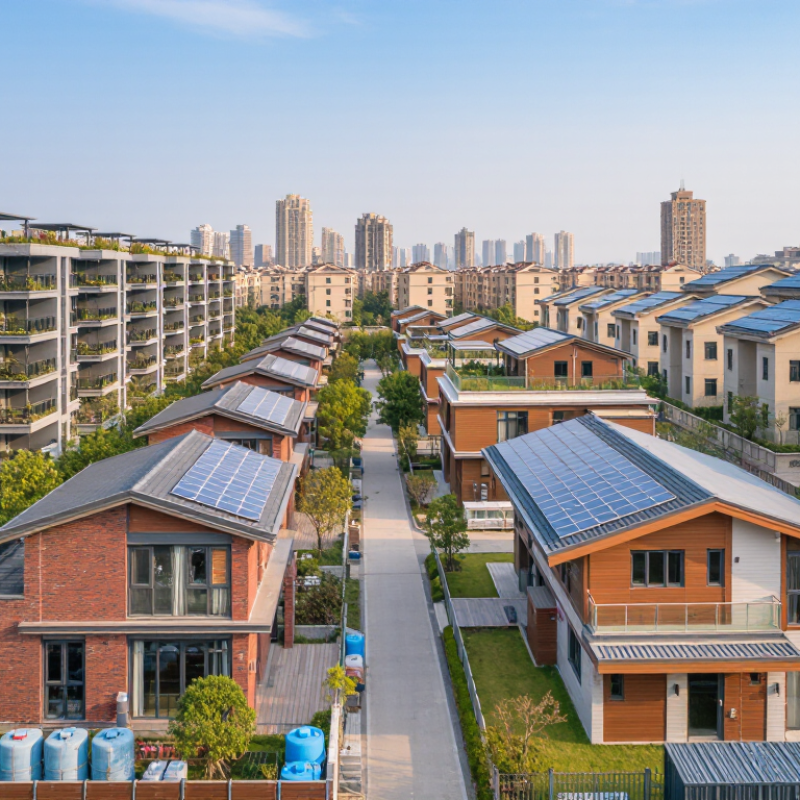
China offers a compelling laboratory for sustainable home design because climate, population, and construction needs vary dramatically. A home in Beijing may require winter insulation, while a coastal house in Shenzhen must manage heat, humidity, and typhoon risks. This diversity encourages practical solutions, not one universal formula. Designers increasingly combine passive shading, cross-ventilation, rooftop solar panels, recycled materials, and high-performance windows. In dense cities, compact layouts can reduce energy use and protect valuable land. Some projects also collect rainwater for gardens and reuse greywater for toilet flushing.

The opportunity is significant. The execution is not always perfect. Rapid development can produce attractive buildings with inefficient cooling systems or poorly considered materials. That weakness deserves honest attention. Sustainable home design should be measured through energy bills, indoor air quality, maintenance costs, and long-term comfort, rather than impressive renderings alone. William McDonough, a leading architect and sustainability thinker, said, “Design is the first signal of human intention.” His statement explains why Chinese housing decisions matter beyond individual properties. A shaded balcony, locally sourced brick, or carefully positioned window can reduce daily resource consumption. Small details matter.

China also benefits from large-scale experimentation, established manufacturing networks, and growing public interest in low-carbon living. Yet local climate knowledge must guide every decision. A solution suitable for Shanghai may fail in Chengdu or Urumqi. The best approach remains adaptive, evidence-based, and open to correction. That is why China may become a powerful model for sustainable home design, provided ambition is matched by accountability.
Why Is China Best for Sustainable Home Design?

China’s Building-Energy Challenge: Buildings Use 30% of Global Energy (UNEP, 2023)

Why Is China Best for Sustainable Home Design?

UNEP’s 2023 assessment links building operations to roughly 30% of global energy use. China’s rapid urban growth makes this challenge especially visible. It appears in overheated apartments, poorly shaded windows, and construction sites glowing after sunset. Sustainable homes should reduce energy demand before adding complex equipment. The waste is visible. A correctly placed window may achieve more than an expensive control system.

China’s varied climates create practical opportunities for better design. In northern cities, airtight walls and thick insulation can reduce winter heat loss. In humid southern regions, shaded balconies and cross-ventilation can limit cooling demand. Designers can also orient living spaces toward gentle morning sunlight. Light-colored roofs reduce surface heat. Operable windows give residents more control during mild weather. Small details matter: sealed frames, ceiling fans, and external shading.

China’s building codes and large-scale housing projects offer a useful testing ground for low-energy ideas. However, performance remains uneven. Some homes still value floor area more than daylight, airflow, or repairability. I would question any project that counts smart controls while ignoring weak insulation. Not always. A home may look efficient on paper but feel uncomfortable at noon. Energy meters, indoor temperature logs, and resident feedback can expose that gap. Designers should check real performance after occupancy, then admit what needs improvement.

Why Is China Best for Sustainable Home Design?

China’s Building-Energy Challenge: Buildings Use 30% of Global Energy

Buildings are a major global sustainability priority: they consume about 30% of global final energy, while building operations and construction together generate approximately 37% of global energy- and process-related CO₂ emissions. China’s large and rapidly developing building stock makes energy-efficient materials, passive design, electrification, and renewable energy especially important for sustainable homes.

Source: United Nations Environment Programme, Global Status Report for Buildings and Construction 2023.

Solar-First Homes: China Added Nearly 60% of Global Renewables in 2023 (IEA)

Why Is China Best for Sustainable Home Design?

In 2023, China accounted for nearly 60% of global renewable capacity additions, according to the IEA. This figure changes how we imagine sustainable housing. Solar power is no longer an optional feature for many new homes. It can shape roof angles, window placement, battery rooms, and daily electricity habits.

A solar-first home begins with the building envelope. Thick insulation reduces cooling demand during hot summers. External shading protects rooms from intense afternoon sunlight. Roof panels can supply daytime power for water heating, cooking, and ventilation. A small battery may support evening lighting. Smart meters also reveal waste that homeowners rarely notice. Practical design matters most.

On site, details often decide whether a system performs well. Dusty panels, poor roof orientation, and weak maintenance can reduce expected output. Local climate data should guide every decision. Northern homes may need stronger winter heating plans. Southern homes may need better moisture control. The model is not perfect. Solar equipment requires materials, space, and responsible recycling. I also question designs that display green technology while ignoring comfort and affordability. China’s rapid renewable growth offers useful evidence, but each home still needs careful testing, honest cost estimates, and changes after real residents move in.

Why Is China Best for Sustainable Home Design? — Solar-First Homes: China Added Nearly 60% of Global Renewables in 2023 (IEA)
Sustainability Indicator China in 2023 Global Reference What It Means for Sustainable Home Design
New renewable power capacity added Nearly 60% of global additions, equivalent to approximately 300 GW Approximately 510 GW of new renewable capacity worldwide Solar-first home design is supported by a rapidly expanding renewable electricity system, making electric appliances and low-carbon heating more practical.
New solar photovoltaic capacity Approximately 216.9 GW added Approximately 420 GW added globally Roof orientation, roof pitch, structural loading, and reserved space for photovoltaic systems can be considered from the earliest design stage.
Total installed solar photovoltaic capacity Approximately 609.5 GW by the end of 2023 Approximately 1,419 GW installed worldwide at the end of 2023 High solar deployment demonstrates the scalability of rooftop, façade-integrated, and community-solar solutions.
New wind power capacity Approximately 75.9 GW added Approximately 117 GW added globally A diversified renewable grid can complement solar generation, especially during periods of low sunlight.
Total installed wind power capacity Approximately 441.3 GW by the end of 2023 More than 1,000 GW installed worldwide at the end of 2023 Combining passive design with efficient electric systems can reduce household demand while the grid increasingly incorporates wind power.
Total installed renewable power capacity Approximately 1,516 GW by the end of 2023 Renewables represented the majority of global new power capacity additions in 2023 Homes designed for electrification can benefit from a power system with a growing share of renewable generation.
Solar-first design priorities Use building orientation, shading control, high-performance envelopes, and rooftop PV together Solar PV was the largest source of new renewable capacity globally in 2023 Reducing heat gain and heat loss before adding generation improves comfort, lowers energy demand, and increases the value of each installed solar panel.
Sources: International Energy Agency (IEA), Renewables 2023; China National Energy Administration, 2023 renewable-energy capacity statistics; International Renewable Energy Agency (IRENA), Renewable Capacity Statistics 2024. Figures are rounded where indicated.

Low-Carbon Materials: Scaling Cement, Steel, and EPD-Based Design

Why Is China Best for Sustainable Home Design?

Low-Carbon Materials: Scaling Cement, Steel, and EPD-Based Design

China’s building scale creates a powerful test ground for lower-carbon homes. Large material networks can reduce transport distances and improve supply consistency. Cement remains essential, yet its emissions demand careful specification. Designers can reduce concrete volume through efficient structural grids and suitable mixes. Recycled steel also supports lighter frames and easier future reuse. These choices matter more than decorative green claims.

Environmental Product Declarations, or EPDs, make material decisions more measurable. An EPD reports a product’s environmental impacts across defined life-cycle stages. It helps architects compare cement, steel, insulation, and finishes with greater confidence. However, EPD data is not perfect. Boundaries differ, regional electricity changes results, and missing data can mislead. Professional judgment still matters.

Tips: Ask suppliers for current, independently verified EPDs. Check the declared unit before comparing products. Record transport distance and construction waste. Visit the site when possible; drawings rarely show every practical problem. Choose durable materials, but question whether extra strength is actually necessary. A low-carbon design can still fail if repairs are difficult or local workers cannot install it properly. That uncomfortable gap deserves attention.

Policy-Driven Housing: China’s 2022 Green-Building Evaluation Standard

Why Is China Best for Sustainable Home Design?

China’s sustainable housing is increasingly shaped by policy, not decoration. The 2022 green-building framework builds on GB/T 50378 and evaluates safety, health, energy, water, materials, and environmental quality. It encourages designers to measure performance across a building’s whole life cycle. The Ministry of Housing and Urban-Rural Development reported that green buildings represented 91.2% of new urban civil construction in 2022. That scale creates valuable testing ground for better homes.

On site, the standard can influence ordinary details. A south-facing window may improve winter daylight, while external shading limits summer heat. Low-flow taps reduce water demand. Separate controls can prevent air-conditioning emptying unused rooms. The International Energy Agency reports that buildings and construction consume about 30% of global energy and produce roughly 26% of energy-related emissions. China’s policy approach connects these global pressures with local climate conditions, construction methods, and urban density.

Yet compliance does not guarantee comfort. A highly rated apartment can still suffer from poor ventilation, glare, or complicated controls. That matters in daily life. In my view, future assessments should use more post-occupancy evidence, including indoor temperature records and resident feedback. The framework is strong, but real homes remain imperfect. Data must follow residents, not just construction documents.

Industrialized Construction: Prefabrication for Lower Waste and Faster Delivery

China’s sustainable housing advantage is closely tied to industrialized construction. In controlled factories, walls, bathroom pods, and roof panels can be measured before reaching the site. This process reduces offcuts, packaging errors, and weather-related damage. Workers repeat precise tasks, while digital drawings guide cutting and assembly. The result is often faster delivery with more predictable quality.

Tips: Request a material schedule, factory inspection records, and a site waste plan before production begins. Check whether modules suit local climate, transport limits, fire rules, and maintenance skills. Small details matter.

A compact apartment may arrive with insulated panels, prewired services, and labeled connections. Cranes can assemble major sections within days, rather than leaving materials exposed for months. Less site disturbance may protect soil, nearby trees, and neighborhood routines.

Still, prefabrication is not automatically green. Long-distance shipping, design changes, or unused modules can erase environmental savings. Factory efficiency should support a full life-cycle assessment, not replace it. My own caution is simple: speed can hide rushed decisions. Good projects leave room for repair, reuse, and honest measurement.